

A Comprehensive Analysis of Technical Requirements and Algorithmic Frameworks for Automated Self-Driving Vehicles
Abstract
This paper explores the multi-layered technical architecture required for the successful implementation of self-driving vehicles. It covers the transition from basic internal mechanical synchronisation to complex external networking and traffic management algorithms. By integrating artificial intelligence (AI) and machine learning (ML) with mechanical precision, autonomous systems aim to surpass human driving performance in safety and efficiency.
1. Internal Mechanical Synchronisation and Basic Functionality
The foundation of any self-driving car lies in its internal mechanical features, specifically the integration of the gearbox, clutch, steering wheel, brakes, and accelerator. For a vehicle to operate autonomously, these components must achieve perfect synchronisation.
For instance, the gearbox must adjust in accordance with precise acceleration and deceleration needs, working in harmony with the braking system to ensure smooth transitions. A critical performance metric is response time, which must be lower than that of an average driver and significantly lower than that of Formula 1 drivers to ensure safety.
2. The Central System and Navigational Intelligence
The “backbone” of the autonomous vehicle is the Central System, which stores and processes data necessary for navigation. This system utilizes AI and ML to manage basic driving mechanisms, such as:
• Lane switching and lateral movement.
• Scenario analysis, where the system calculates the best possible manoeuvres using permutations and combinations of different speeds and environmental factors.
• Connectivity, where the car either maintains a constant internet connection or updates its local database whenever a connection is available.
3. Advanced Manoeuvrability and Environmental Adaptation
Beyond basic movement, the Central System must manage vehicle balance to prevent skidding, particularly when cornering, overtaking, or dodging obstacles at high speeds. To achieve this, the system applies mathematical equations of speed, distance, time, and circular motion.
Furthermore, the vehicle must adapt to external variables, including:
• Weather and road conditions.
• Component health, such as the age and usability of tyres or the intensity of the braking system based on historical wear-and-tear data.
4. Complex Data Infrastructure and Connectivity
To operate effectively in diverse environments, vehicles require a centralised database populated by “Test Cars” that pre-map locations. These maps are not merely 360-degree visual representations but include 24/7 data on pedestrian traffic, environmental shifts, and car density throughout the year.
Interaction with other road users is managed through two primary methods:
1. Direct Connectivity: A “Virtual Private Network” or radar system where autonomous cars share real-time data on speed and direction to synchronise movements.
2. Radar Sensing: A system designed to detect and measure the speed of non-autonomous vehicles that cannot share data.
5. Traffic Algorithms and Route Optimisation
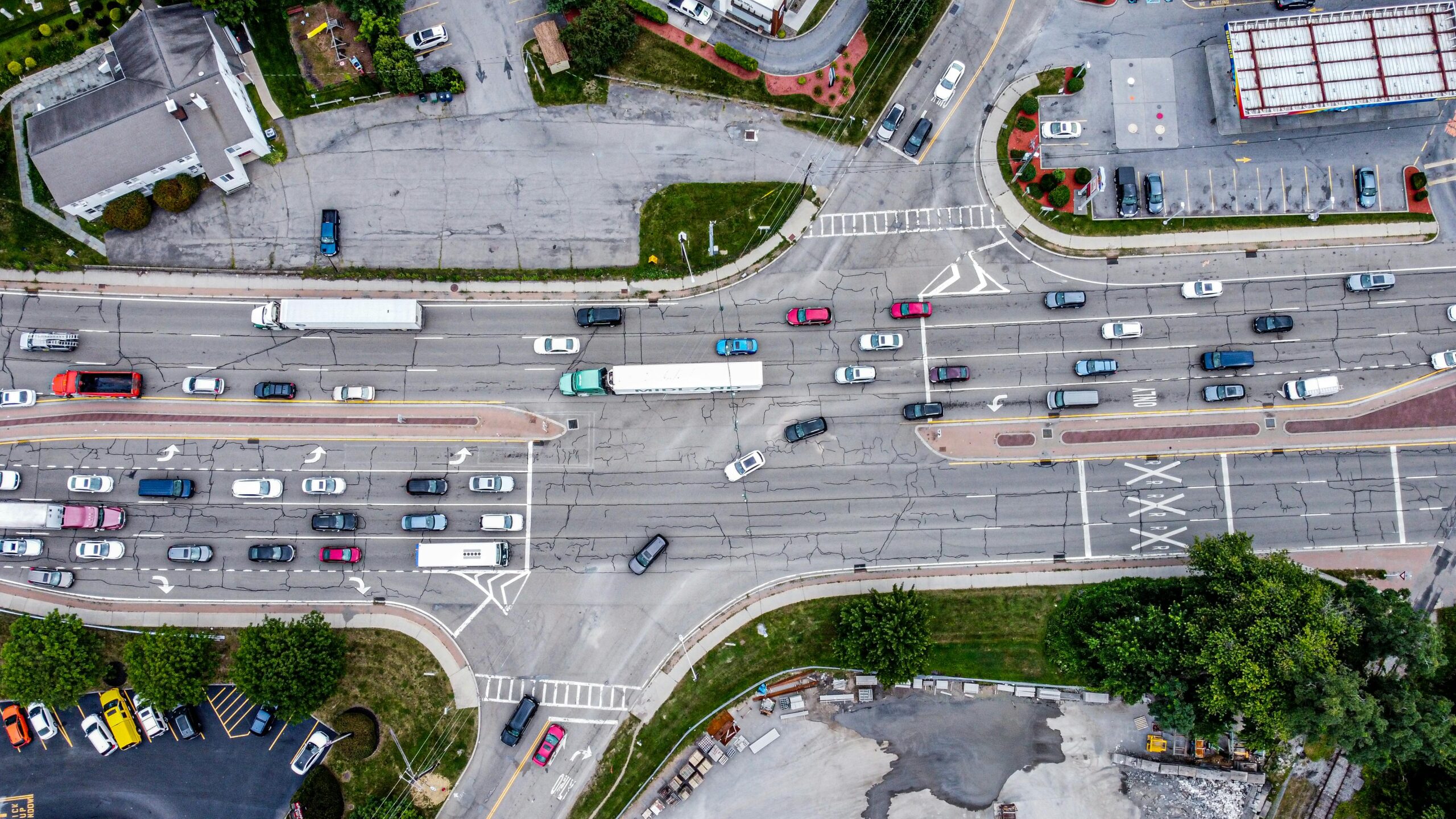
Most autonomous commutes follow predefined routes (e.g., Home-to-Office), where traffic conditions are often consistent. To manage these routes, sophisticated traffic algorithms are employed to prevent the “wave effect”—a phenomenon where a single car stopping causes a chain reaction of delays. By customising the speeds of individual cars within a line, the system can distribute traffic evenly across lanes, thereby improving fuel efficiency and ensuring a smoother commute.
Conclusion
The evolution of self-driving technology depends on the seamless integration of mechanical precision and data-driven intelligence. By treating a fleet of vehicles as a synchronised network rather than isolated units, autonomous systems can significantly reduce human error and optimise global transport efficiency.
——————————————————————————–
Analogy for Understanding: Think of a self-driving car like an orchestra. The mechanical parts (brakes, gears) are the individual instruments that must be perfectly tuned. The Central System is the conductor, ensuring every player reacts instantly to the score (the data). Finally, the connectivity between cars is like multiple orchestras playing in different rooms but listening to each other through headsets to ensure they all stay in the exact same rhythm, preventing any “clashes” in the music.
You can ask questions and answers here: