
Jaipur
Jaipur, the “Pink City,” is where the opulence of the Rajput era meets the vibrant chaos of modern Rajasthan. In 2026, it remains a cornerstone of the Golden Triangle, blending UNESCO World Heritage sites with a burgeoning scene of boutique cafes and artisan workshops.
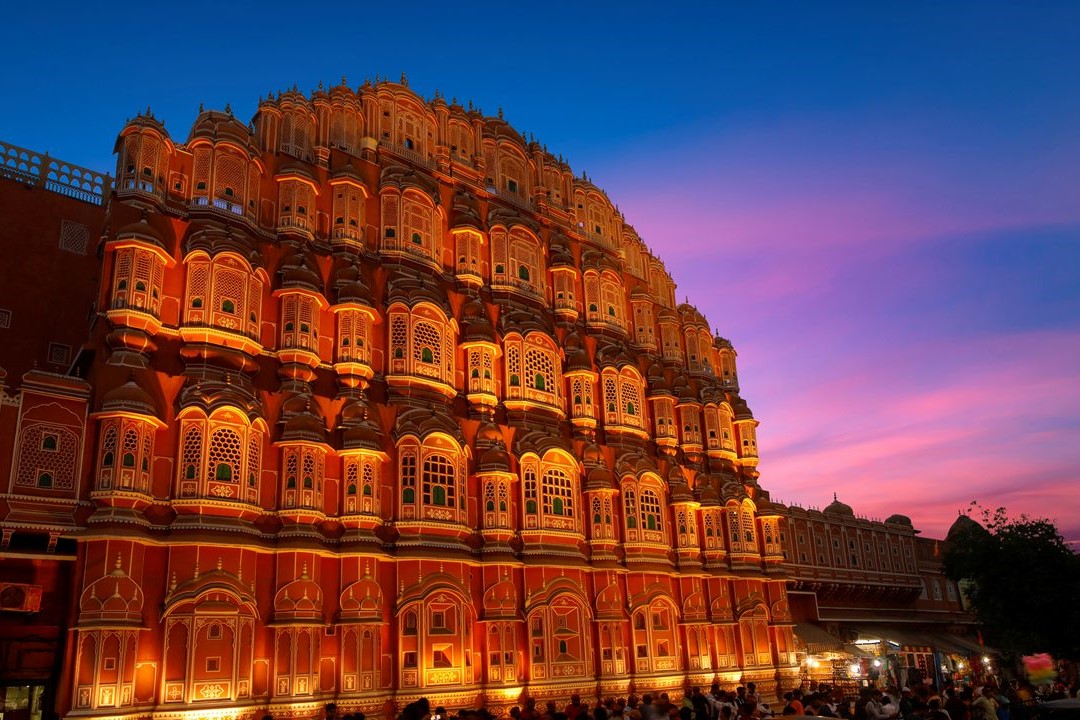
The city gets its name from the terracotta-pink wash applied to its buildings in 1876 to welcome the Prince of Wales—a tradition that continues today, giving the old city its distinctive, warm glow at sunset.
The Royal Trio: Forts and Palaces
- Amer Fort: Perched on the Aravalli Hills, this 16th-century fortress is a marvel of red sandstone and marble. In 2026, the “Amber by Night” experience is a must; seeing the Sheesh Mahal (Hall of Mirrors) shimmering under specialized lighting feels like standing inside a diamond.
- Hawa Mahal: The “Palace of Winds” is Jaipur’s most iconic silhouette. Its 953 honeycomb windows were designed for royal ladies to observe street life unseen. For the best photo, head to the “Tattoo Cafe” or “Wind View Cafe” directly across the street at sunrise.
- City Palace & Jantar Mantar: Right in the heart of the city, the City Palace still houses the royal family. Next door lies Jantar Mantar, an 18th-century astronomical observatory that looks like a collection of giant, surrealist sculptures.
3-Day “Pink City” Itinerary
Day 1: The Walled City & Royal Heritage
- Morning: Start at Hawa Mahal before the crowds arrive. Walk to the City Palace to see the royal textiles and the massive silver water urns (the largest in the world).
- Afternoon: Explore Jantar Mantar. Spend an hour marveling at the Samrat Yantra, a sundial that is accurate to within two seconds.
- Evening: Visit Albert Hall Museum at night when it is brilliantly illuminated. Have dinner at Gulab Ji Chai Wale or LMB (Laxmi Misthan Bhandar) in Johari Bazaar.
Day 2: Hilltop Forts & Sunset Views
- Morning: Head to Amer Fort. Instead of the traditional elephant ride, consider the heritage walk through the tunnel connecting Amer to Jaigarh Fort to see the Jaivana, the world’s largest cannon on wheels.
- Afternoon: Visit Jal Mahal, the floating palace in Man Sagar Lake. While you can’t enter the palace, the lakeside walk is serene.
- Evening: Drive up to Nahargarh Fort for sunset. The panoramic view of the entire lit-up city is breathtaking. End the night with dinner at Padao, the fort’s open-air restaurant.
Day 3: Artisans, Monkeys, and Culture
- Morning: Visit Galtaji (The Monkey Temple), a series of temples built into a mountain pass with natural springs and friendly (but cheeky) residents.
- Afternoon: Head to Sanganer or Bagru village (30 mins away) for a hand-block printing workshop. It’s the best way to understand Jaipur’s famous textile heritage.
- Evening: Finish your trip at Chokhi Dhani, an ethnic village resort. It offers a total immersion into Rajasthani culture with folk dances, camel rides, and a traditional sit-down Thali.
The Jaipur Tasting Menu (2026 Favorites)
| Dish | Best Spot | The Vibe |
| Pyaaz Kachori | Rawat Misthan Bhandar | A spicy, crispy morning staple. |
| Dal Baati Churma | Santosh Bhojnalaya | The ultimate Rajasthani comfort meal. |
| Laal Maas | Handi (MI Road) | Fiery mutton curry for the brave. |
| Kulhad Lassi | Lassiwala (since 1944) | Served in earthen pots with a thick layer of malai. |
| Ghevar | Paneer Ghevar at LMB | A honeycomb-shaped dessert unique to the region. |
2026 Pro-Tips
- The Composite Ticket: Buy the “Composite Entry Ticket” (approx. ₹1000 for foreigners, ₹100-300 for Indians) which covers Amer, Nahargarh, Hawa Mahal, Jantar Mantar, and Albert Hall for two days.
- E-Rickshaws: In the narrow lanes of the old city, skip the cabs. Blue e-rickshaws are the fastest and most eco-friendly way to navigate.
- Shopping: Johari Bazaar is for jewelry, while Bapu Bazaar is best for Mojaris (leather shoes) and block-printed linens.
0 Comments