
Nurpur
Nurpur is where the rugged history of the Pathania Rajputs meets the romantic legacy of the Mughals. Located in the Kangra district of Himachal Pradesh, it’s a town that often gets overlooked by travelers rushing toward Dharamshala or Dalhousie, but for those who stop, it reveals a layer of history unlike any other in the state.
In 2026, Nurpur remains a quintessential “slow travel” destination—a place of red stone ruins, miraculous trees, and a temple that breaks all conventional rules.
The Fort of Resilience: Nurpur Fort
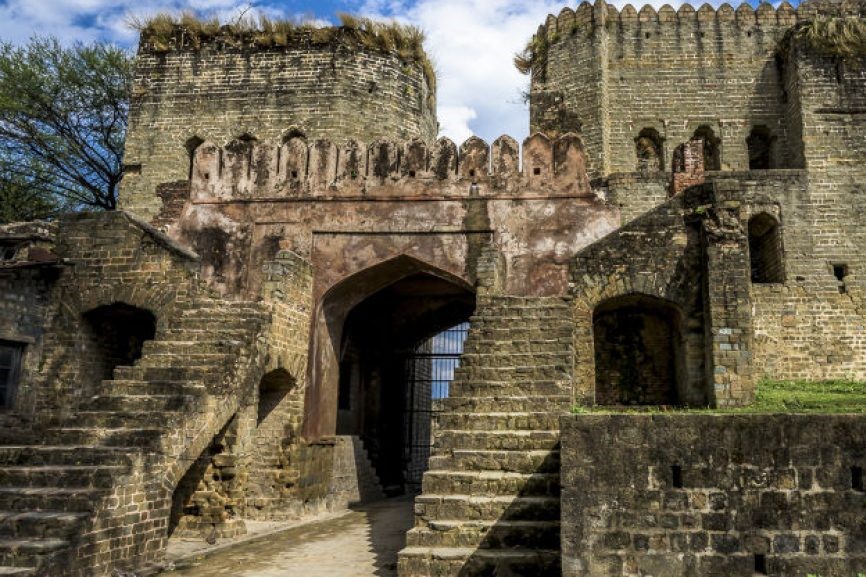
Standing on a high ridge overlooking the Jabhar Khud (a tributary of the Chakki River), Nurpur Fort is a 1,000-year-old sentinel. Originally known as Dhameri, it was renamed in the 17th century by Raja Jagat Singh to honor the Mughal Empress Nur Jahan, who was so enchanted by the valley that she reportedly considered building a summer palace here.
- The Architecture: The fort is a striking blend of Rajput and Mughal styles. Though it suffered immense damage in the 1905 earthquake, the massive entry gates and the delicately carved outer walls—featuring figures of humans, animals, and flora—still stand as a testament to Pathania craftsmanship.
- The Hero’s Legacy: The fort also honors Wazir Ram Singh Pathania, a young local hero who led a fierce rebellion against the British in 1848. His stories of valor are still part of the local folklore.
The Soul of Nurpur: Brij Raj Swami Temple
Inside the fort lies the most extraordinary site in the region. The Brij Raj Swami Temple is a 16th-century marvel and is believed to be the only temple in the world where Lord Krishna is worshipped alongside Meera Bai rather than Radha.
- The Miraculous Tree: Near the temple stands a 400-year-old Moulshree (Maulsari) tree. Legend says the tree was brought from Chittorgarh in Rajasthan along with the idols. It had dried up during the journey but miraculously turned green and blossomed once it was planted in Nurpur soil.
- The Nightly Legend: Local faith is so strong that the priests still leave a glass of water and a pair of silver slippers (khadaun) for the Lord every night. Devotees believe that the slippers are found shifted and the water consumed by morning, a sign of the deity’s living presence.
2-Day “Heritage & Hills” Itinerary
Day 1: The Royal Circuit
- Morning: Explore the Nurpur Fort. Spend time photographing the intricate carvings on the western walls.
- Afternoon: Visit the Brij Raj Swami Temple. Sit under the ancient Moulshree tree and soak in the bhajans.
- Evening: Walk through the Nurpur Bazaar. Look for Nurpur Shawls—the town has a long tradition of weaving high-quality woolens and pashminas.
- Stay: The HPTDC-run Hotel The Nupur, which offers great views of the Dhauladhar range.
Day 2: Nature & Mysticism
- Morning: Drive to the Nagni Mata Temple (approx. 6 km away). It is famous for a natural spring whose water is believed to cure snake bites.
- Afternoon: Head toward the Pong Dam (Maharana Pratap Sagar) backwaters. In 2026, this area is a major hub for migratory birds and offers peaceful boat rides.
- Departure: Head toward Pathankot (25 km away) for your train or flight.
Traveler’s Notes for 2026
| Feature | Details |
| Best Time | October to March (Pleasant weather and clear mountain views). |
| Local Treat | Try the local Pahadi Dham (traditional feast) and the famous Nurpur honey. |
| Connectivity | 25 km from Pathankot Railway Station; easily accessible via the Pathankot-Mandi NH. |
| Event | If visiting in August, don’t miss Janmashtami, which is celebrated as a state-level festival here. |