
Pushkar
Pushkar is a place where time doesn’t just slow down; it settles into a rhythmic hum of temple bells and desert winds. Nestled on the edge of the Thar Desert, this white-washed town is one of India’s oldest and most sacred, famously home to the world’s only prominent temple dedicated to Lord Brahma.
In 2026, Pushkar remains a magnetic “hippie-meets-holy” destination—a sanctuary for spiritual seekers, photographers, and travelers looking to escape the relentless pace of Rajasthan’s larger cities.
The Sacred Center: Pushkar Lake
Everything in Pushkar revolves around the Sarovar (Lake). According to legend, the lake appeared where Lord Brahma dropped a lotus flower to defeat a demon.
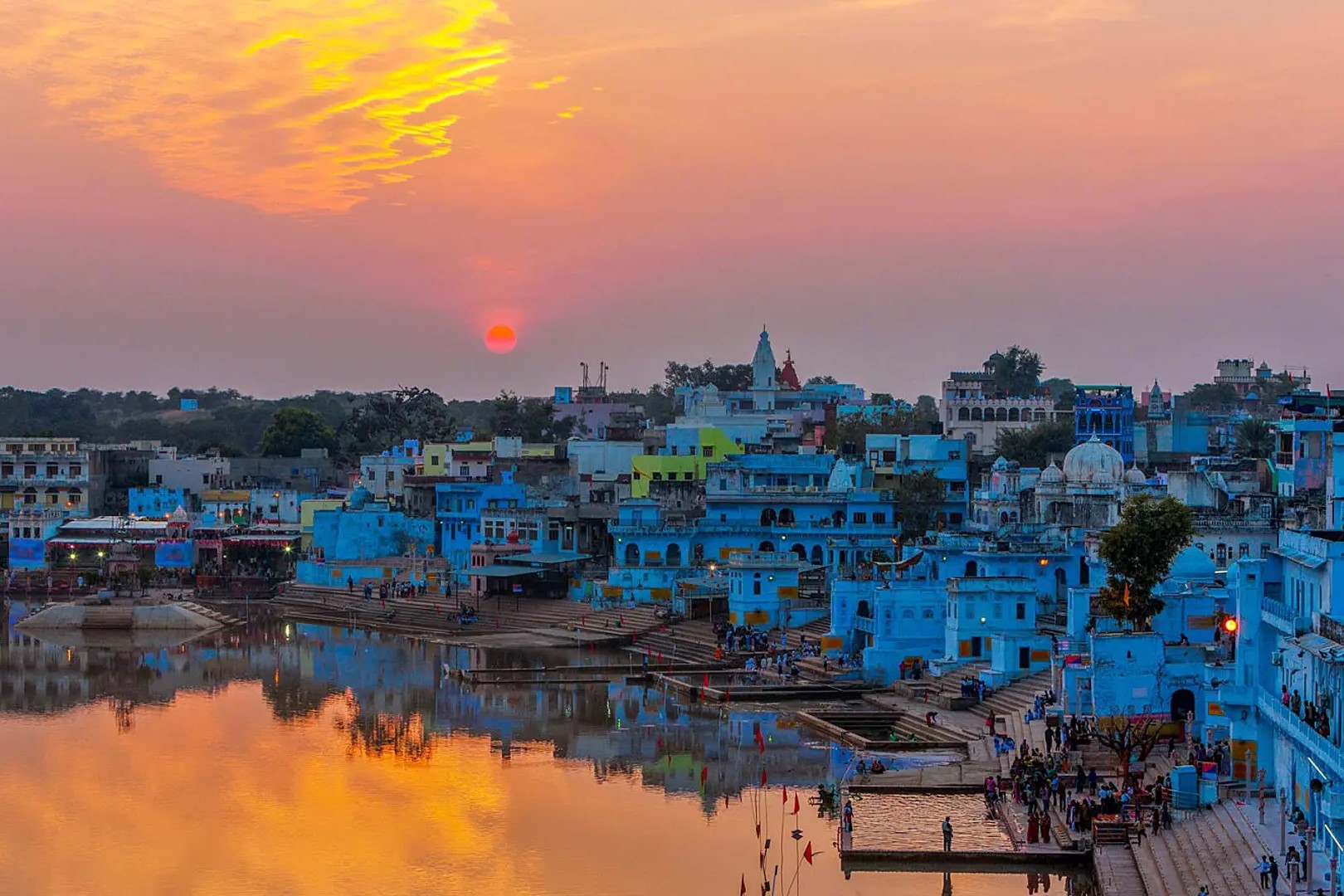
- The 52 Ghats: Walking clockwise around the lake is a sensory experience. You’ll see devotees taking a ritual dip, priests performing puja, and the reflection of hundreds of milky-blue temples in the water.
- Evening Aarti: As dusk falls, head to Varaha Ghat. The ceremony of light, accompanied by the deep reverberation of the Nagara drums and the smell of incense, is one of the most soul-stirring moments you can have in India.
- The “Oxford of the Desert”: Because it is a holy city, Pushkar is strictly vegetarian and alcohol-free. This has fostered a unique café culture where “special Lassis” and Israeli-influenced cuisine are the norms.
Peaks and Palaces
While the town is flat, the surrounding Aravalli hills offer spectacular vantage points.
- Savitri Mata Temple: Perched atop Ratnagiri Hill, this temple is dedicated to Brahma’s first wife. You can hike up the stone steps (about 60 minutes) or take the modern ropeway. Reaching the top for sunrise, watching the mist lift off the desert dunes, is worth every bit of effort.
- The Brahma Temple: Marked by its distinctive red spire and a marble swan, the 14th-century Jagatpita Brahma Mandir is the town’s spiritual anchor. The vibe here is surprisingly intimate and ancient, untouched by the commercial scale of other Indian pilgrimage sites.
- The Bazaar: The narrow, winding lanes of the main market are a riot of color—silver tribal jewelry, embroidered leather bags, and rose-scented perfumes (Pushkar is a major rose-exporting hub).
The 2026 Pushkar Mela (Camel Fair)
If you visit in November, the town transforms. The Pushkar Camel Fair (scheduled for November 17–24, 2026) is one of the world’s largest livestock fairs.
- The Mela Ground: Imagine 30,000+ camels and horses silhouetted against the golden dunes.
- Quirky Competitions: Beyond the trading, you’ll see the “Longest Moustache” contest, turban-tying competitions, and “Matka” (pot) races between locals and tourists.
- Hot Air Ballooning: Floating over the fairgrounds at dawn, seeing the sprawling camps and thousands of campfires from above, is the ultimate 2026 bucket-list experience.
A Taste of the Dunes: Café Culture
| The Spot | What to Order | The Vibe |
| Sunset Café | Poha & Masala Chai | Best view of the lake; perfect for the evening transition. |
| Laughing Buddha | Buddha Bowls / Veggie Burger | A cozy, hippie-favored balcony overlooking the market. |
| Tibet Kitchen | Cheese Momos | Tucked away in a lane, serving authentic Himalayan comfort. |
| Radhe Ji Malpua | Malpua with Rabri | A legendary street-side stall for deep-fried, syrupy goodness. |
A 3-day trip to Pushkar is the perfect amount of time to soak in its “Hippie-meets-Holy” atmosphere. Since the town is relatively small, you can explore it at a leisurely pace—what locals call Susegad in Goa, or simply “Pushkar time” here.
Here is your detailed 3-day itinerary for 2026.
Day 1: The Spiritual Heart & Sacred Waters
- Morning (9:00 AM): The Brahma Temple & Old Town. Start your journey at the Jagatpita Brahma Mandir. It is most peaceful in the morning. Afterward, wander through the narrow lanes of the Main Bazaar. The market is a sensory overload of silver jewelry, rose perfumes, and colorful textiles.
- Lunch (1:00 PM): Rooftop Dining. Head to Laughing Buddha Cafe or Cafe Lake View. Both offer fantastic vegetarian bowls and a bird’s-eye view of the town’s bustling streets.
- Afternoon (3:30 PM): The 52 Ghats. Take a slow walk around the Pushkar Lake. Observe the rituals at the various ghats. Note: Remember to remove your shoes before stepping onto the ghats and maintain a respectful silence.
- Evening (6:00 PM): Varaha Ghat Aarti. As the sun sets, grab a spot at Varaha Ghat for the evening Aarti. The rhythmic chanting, the smell of incense, and the hundreds of diyas (lamps) floating on the water create a truly magical atmosphere.
- Dinner: Try the wood-fired pizzas at La Pizzeria, set in a quiet garden courtyard.
Day 2: Heights, History & Hues
- Early Morning (5:30 AM): Sunrise at Savitri Temple. You have two options: a 60-minute hike up the stone steps or the Ropeway (Cable Car) which takes just 6 minutes. The view of the sun rising over the Thar Desert and the entire white-washed town of Pushkar is the best in the region.
- Late Morning (10:30 AM): Temple Trail. Visit the Rangji Temple, which is unique for its South Indian Gopuram style mixed with Rajput architecture. If you have time, find the Apteshwar Temple, an 12th-century underground shrine dedicated to Lord Shiva.
- Afternoon (2:00 PM): Rose Gardens & Relaxation. Pushkar is the “Rose Garden of Rajasthan.” Take a short auto-ride to the outskirts to see the damask rose fields. Afterward, spend a quiet hour at Honey & Spice café, known for its healthy organic treats and great coffee.
- Evening (4:30 PM): Camel Safari & Desert Sunset. Head into the dunes on a camel or a camel cart. Most safaris end at a desert camp where you can enjoy traditional folk music and a Rajasthani “Ker Sangri” dinner under the stars.
Day 3: Hidden Gems & The Final Dip
- Morning (9:00 AM): Pap Mochani & Spiritual Walks. Hike up the smaller hill to the Pap Mochani Temple. It’s less crowded than Savitri and offers a different perspective of the valley.
- Afternoon (12:00 PM): Shopping & Street Food. Do your final souvenir shopping. For lunch, skip the sit-down meal and do a “Malpua Crawl.” Grab a fresh, syrupy Malpua with Rabri from the stalls near the Gau Ghat—it is the signature sweet of Pushkar.
- Optional Extension: Day Trip to Ajmer. If you have a few hours before leaving, take a 30-minute drive through the mountains to the Ajmer Sharif Dargah. The energy at this Sufi shrine is a powerful contrast to the quietude of Pushkar.
- Departure: Head back to Ajmer Junction or Jaipur Airport for your onward journey.
2026 Traveler’s Quick-Guide
| Category | Budget (Moderate) | Note |
| Stay (2 Nights) | ₹5,000 – ₹8,000 | Look for “Havelis” near the lake or luxury tents in the dunes. |
| Food | ₹2,500 – ₹4,000 | Pure vegetarian only; eggs and alcohol are banned in town. |
| Activities | ₹2,000 | Includes Ropeway, Camel Safari, and local guides. |
| Transport | ₹1,500 | Walking is best; use e-rickshaws for longer distances. |